
Buckinghamshire
Buckinghamshire occupies a modest but increasingly coherent place in the English wine landscape. Often overlooked in favour of neighbouring counties with clearer reputations, Buckinghamshire has developed quietly, shaped by fragments of chalk geology, an inland climate, and a pragmatic approach to viticulture. Its importance lies not in scale or stylistic declaration, but in what it demonstrates about consistency and restraint away from the coast.
Buckinghamshire is not a county of obvious viticultural advantage. It does not benefit from sustained maritime moderation, nor does it sit atop a continuous chalk escarpment. What it offers instead is balance. The county rewards careful site selection, realistic yields, and wines designed to work within climatic limits rather than challenge them.
Geologically, Buckinghamshire is mixed. Chalk appears in parts of the Chiltern Hills, extending from neighbouring counties, but it is intermittent rather than dominant. Alongside chalk, the county features clay, flint, gravel, and loam, often in close proximity. These soils tend to be more fertile than pure chalk and retain water more readily, increasing the importance of canopy management and drainage.
Where vineyards succeed
it is typically on or near chalk-influenced slopes, where drainage is improved and vigour naturally moderated.These sites support fruit with sufficient acidity and definition, particularly in cooler years. Elsewhere, soil management becomes central to maintaining balance, with producers relying on rootstock choice, planting density, and yield control to avoid excess growth.
Topography plays a significant roleThe Chiltern Hills provide elevation, slope, and airflow, all of which are critical in an inland county where frost risk can be pronounced. Vineyards positioned above valley floors benefit from cold air drainage, reducing spring frost pressure. Aspect is equally important. South- and south-east-facing slopes maximise sunlight exposure, helping to support ripening in marginal seasons.
ClimaticallyBuckinghamshire experiences a steadier, more continental pattern than coastal counties. Summers can be warm enough to support flavour development, while autumns are often sufficiently long to allow grapes to reach physiological maturity without excessive sugar accumulation. Winters and springs, however, can be colder, reinforcing the importance of site protection and frost mitigation strategies.

Rainfall levels are moderate
While humidity can present challenges in some years, the county generally avoids the extremes seen further west. This balance favours measured viticulture and supports consistency rather than peak ripeness.
Buckinghamshire’s modern wine development has been incremental. Vineyards are generally small to medium in size, often established by producers with clear-eyed expectations rather than speculative ambition. This has limited volume but encouraged attentiveness. Many estates maintain close involvement in vineyard management, allowing for responsive decisions in a county where seasonal variation matters.
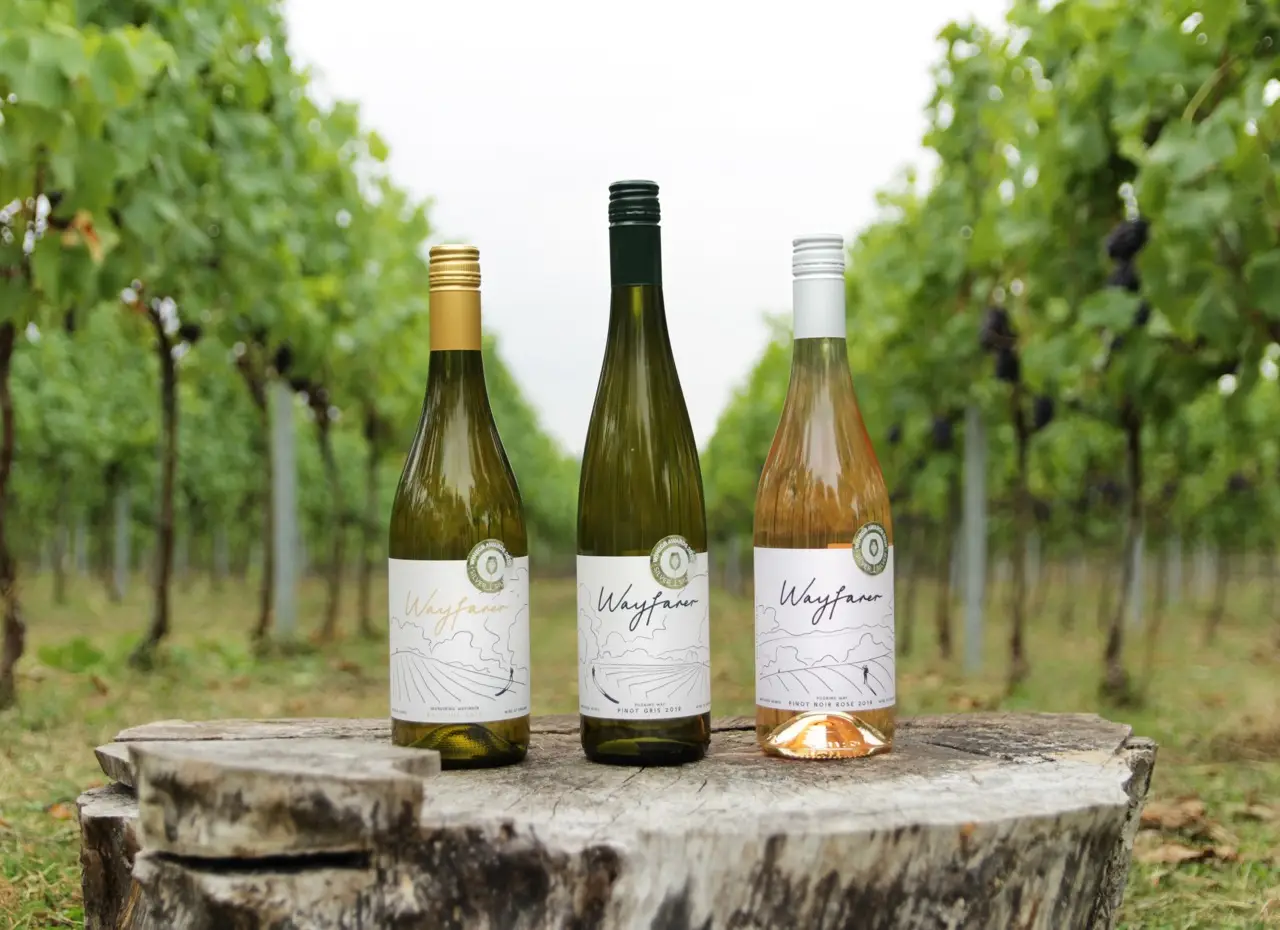
Still wines represent Buckinghamshire’s most credible contribution
Chardonnay has shown promise where sites offer good drainage and exposure. These wines tend to favour balance and texture over austerity, with restrained oak use and an emphasis on drinkability. They are not designed to compete with chalk-driven styles from the south coast, but they offer a composed, inland expression that reflects place.
Aromatic white varieties have also performed reliably, particularly Bacchus. In Buckinghamshire, the variety can deliver freshness and clarity when harvested precisely, avoiding overt pungency or sweetness. These wines align naturally with the county’s climate and reinforce its understated profile.

Red varieties remain more challenging
Pinot Noir can succeed in favourable years, particularly on sheltered slopes, but outcomes are variable. The most convincing examples favour lighter extraction and early drinking, reflecting climatic realities rather than resisting them.Sparkling wine exists but is not central to the county’s identity
Where produced, it tends to prioritise balance and approachability rather than pronounced tension or extended ageing. Buckinghamshire’s strengths lie more clearly in still wines that demonstrate how inland English sites can produce consistency without reliance on maritime influence.
Scale remains limited, constrained by land availability and planning considerations. This restricts expansion but reinforces a quality-led approach. Proximity to London supports direct-to-consumer sales and local market engagement, allowing producers to operate sustainably without pursuing volume growth.
Looking ahead
Buckinghamshire’s future in English wine will depend on continued discipline. Climate change may incrementally improve ripening reliability, but increased variability heightens the importance of site choice and adaptive viticulture. Producers who prioritise resilience and realistic yields will be best placed to succeed.
Buckinghamshire does not seek prominence within English wine. Its value lies in what it demonstrates quietly: that inland counties with mixed geology can produce credible, well-balanced wines when ambition is aligned with environment.